

Understanding a Tribal Workers' Compensation Ordinance: The Foundation of Sovereign Self-Funding
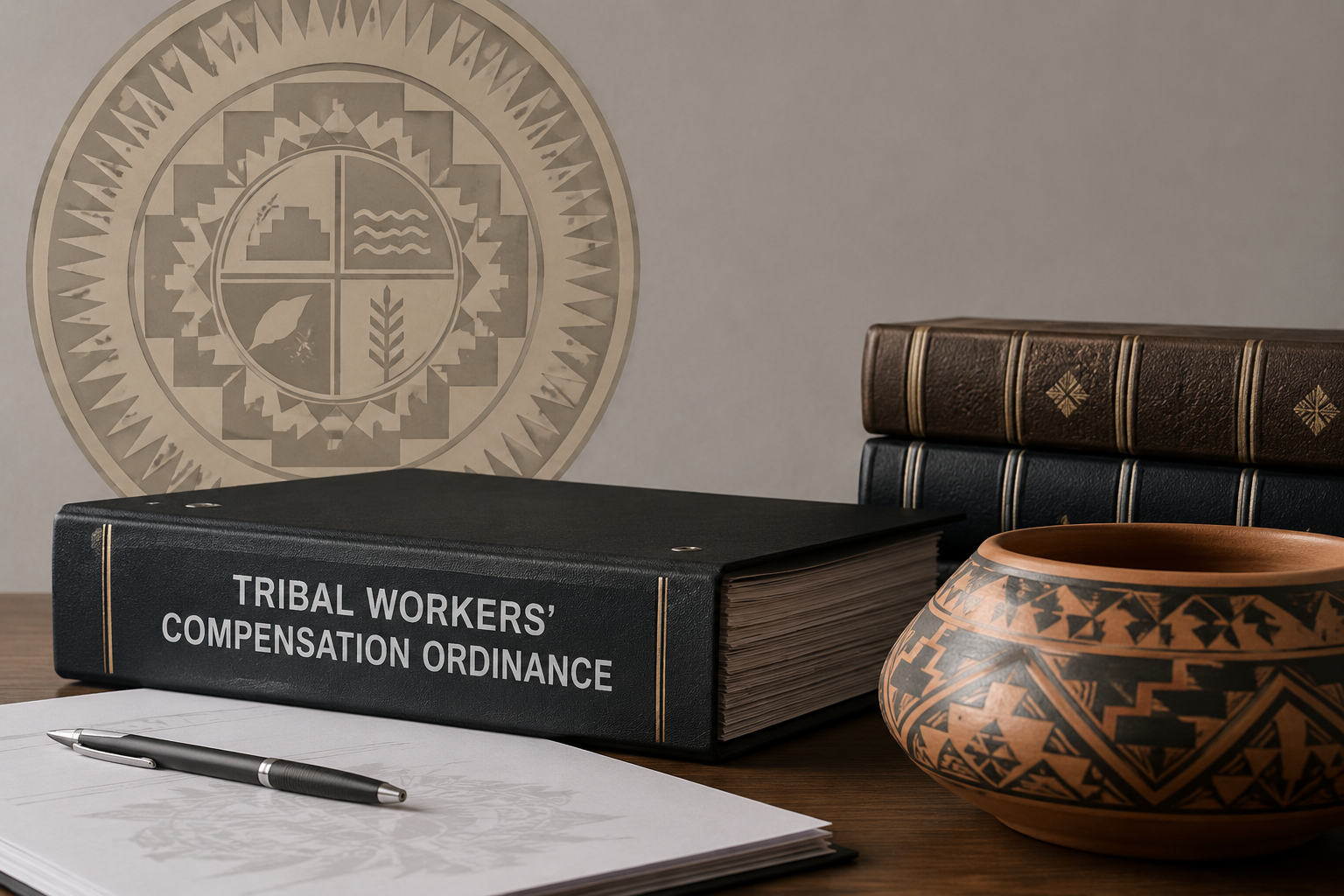
If your Tribal Nation or enterprise is looking to take control of its workers' compensation program, the first and most critical step is understanding the role of a Tribal Workers' Compensation Ordinance. An ordinance is not just a policy document; it is a powerful declaration of self-governance.
When a Tribe transitions to a self-funded workers' compensation program, this ordinance serves as the absolute legal foundation, replacing state laws with a customized set of rules designed by the Tribe, for the Tribe. Here is a detailed breakdown of what a Tribal Workers' Compensation Ordinance is, how it protects the Tribe, and why expert vendors are essential to building it.
What Exactly is a Tribal Ordinance?
At its core, a Tribal Workers' Compensation Ordinance is a local law enacted by the Tribal Council or governing body to manage on-the-job injuries for its employees. Instead of relying on a commercial insurance company or a state workers' compensation board to dictate how injured workers are treated and paid, the Tribe writes its own rulebook.
This document defines exactly who is covered, which types of injuries qualify for compensation, how much will be paid, and the strict deadlines for reporting an incident. Because the Tribe is a sovereign Nation, this ordinance makes clear that no other state workers' compensation law applies to injuries sustained by covered workers.
Distinction from General Liability
It is best practice to keep general liability laws and workers' compensation rules in separate chapters or ordinances, as seen in many successful tribal codes. General liability or tort claims typically require proof of negligence or fault, whereas workers' compensation is a "no-fault" system where benefits are provided regardless of fault.
Furthermore, general liability claims often involve complex arguments over damages like pain and suffering, while a self-funded Workers' Compensation ordinance provides strict, predictable caps on medical care and lost wages. Keeping these separate ensures that the complex rules of general lawsuits do not interfere with the streamlined, no-fault workers' compensation process.
The Shield of Sovereign Immunity and "Exclusive Remedy"
One of the most profound benefits of a Tribal ordinance is how it utilizes and protects the Tribe's sovereign immunity. Sovereign immunity generally protects a Tribal Nation and its assets from being sued in court. Learn how our broader Sovereign Advantage framework safeguards Tribal sovereignty across all risk programs.
An ordinance achieves this by creating a "limited waiver of sovereign immunity". This means the Tribe agrees to take financial responsibility for workplace injuries, but only under the exact terms, conditions, and payout limits strictly defined within the ordinance. Furthermore, the ordinance establishes an "exclusive remedy".
What this means for the Tribe
An injured employee cannot bypass the program to sue the Tribe or the employer in state or federal court for massive damages. The workers' compensation program is the sole and exclusive means of seeking compensation.
What this means for the Employee
They are guaranteed a clear, no-fault path to receive medical care and lost wages efficiently, without the need for expensive, drawn-out, and adversarial lawsuits.
This shield is absolute for workplace injuries. While a general liability ordinance handles claims for the public, the Workers' Compensation ordinance creates a legal barrier known as the "exclusive remedy." This means that if an employee is injured on the job, the workers' compensation program is their sole legal path for compensation, preventing them from bypassing the system to sue under general liability laws.
Why Tribal Ordinances Outperform State Programs
When a Tribe buys into a state-regulated commercial insurance plan, they are forced to play by someone else's rules. By enacting their own ordinance, Tribes gain several distinct advantages:
Total Jurisdictional Control
A Tribal ordinance explicitly rejects state systems. If there is a dispute, the appeals process remains entirely within the Tribe's borders—often going through an independent arbitrator or Tribal Court.
Cultural Customization
State plans offer a generic approach to healthcare. A Tribal ordinance can be culturally sensitive, such as specifically recognizing and covering the services of traditional healing practitioners.
Keep Dollars Local
By self-funding, the Tribe pays claims directly out of its own reserves rather than paying inflated premiums. Any funds not spent on claims remain within the community for reinvestment.
The Crucial Role of a Competent TPA Vendor
Because an ordinance is a binding legal document that governs the Tribe's financial liability, it must be drafted with absolute precision. A poorly written ordinance can leave the Tribe exposed to uncontrolled costs or jurisdictional loopholes. This is where hiring an expert Third-Party Administrator (TPA) becomes vital. A Tribe owns the plan, but a competent vendor acts as an extension of the Tribe's staff to ensure the program runs flawlessly.
Expert Ordinance Writing
Experienced TPAs, like Summit Administration Services, specialize in crafting and tailoring ordinances specifically for Tribal organizations. They know exactly what legal language is required to fortify the exclusive remedy protections and ensure compliance with Tribal laws. While a legal professional should still review the final ordinance, having Summit prepare the draft for legal review can save the Tribe thousands of dollars in attorney fees.
Navigating Federal Rules
A skilled vendor knows how to write the ordinance to interact properly with federal programs and maximize savings. Because an ordinance cannot mandate MLR acceptance from all outside medical providers, strategic language is required. They can draft the document to direct injured employees to IHS facilities for their initial evaluation. This approach allows the Tribe to utilize Medicare-Like Rates (MLR) for those specific IHS reimbursements, effectively protecting and stretching the plan's self-funded dollars.
Fair and Objective Administration
Once the ordinance is enacted, the TPA manages the day-to-day claims based on the rules the Tribe sets. They handle the complex medical billing, enforce the strict reporting deadlines, and provide the objective dispute resolution needed to keep the program fair for both the employer and the employee.
The Bottom Line
The Workers' Compensation Ordinance fits into a Tribe's overall liability laws by acting as an exclusive exception for employee injuries. They should generally be kept as separate ordinances rather than combined, because they address entirely different legal processes and types of risk.
A Tribal Workers' Compensation Ordinance is the ultimate tool for financial and legal independence. By combining the power of Tribal Sovereignty with the technical expertise of a seasoned administrative partner, a Tribe can protect its assets, care for its people, and keep its resources firmly within Indian Country.
Ready to Draft Your Ordinance?
See how Summit Administration Services can help your Nation structure a sovereign workers' compensation ordinance that protects your people and your assets.
Request a TPA Consultation